Thinking about Scottsdale as one city can be misleading. It stretches 31 miles from north to south, and the lifestyle in one area can feel completely different from the next. If you are relocating, the smartest move is to match your daily routine, budget, and home style preferences to the right part of town before you start touring. This guide will help you do exactly that, with a practical look at Scottsdale’s main neighborhood patterns, price ranges, and relocation tips. Let’s dive in.
Why Scottsdale Feels So Different
Scottsdale covers 184.5 square miles and borders Phoenix, the McDowell Mountains, the Salt River, and the Tonto National Forest. Because of that scale, your experience can change a lot depending on where you land.
The city uses character-based planning, which is a helpful way to understand neighborhood differences. In simple terms, Scottsdale is not one uniform market. It is a collection of distinct areas with different housing styles, lot sizes, access patterns, and lifestyle advantages.
Start With Your Daily Routine
Before you focus on finishes or square footage, think about how you will actually live in Scottsdale. Your commute, errands, recreation habits, and travel needs will shape which area feels most convenient.
Scottsdale Road is the city’s only uninterrupted major north-south arterial, and Loop 101 is the key freeway spine for north Scottsdale access. That makes central and south Scottsdale a practical base if you expect a lot of local trips, while north Scottsdale and the foothill areas may fit better if you want preserve access or north-valley job access and are comfortable using the freeway network.
Scottsdale also offers strong mobility options for a suburban city. You will find a fare-free Scottsdale Trolley with three fixed routes, weekday service every 20 minutes, and connections to regional bus routes. For outdoor movement, the city has 384 miles of bike lanes, bike paths, bike routes, and paved shoulders, plus the 11-mile Indian Bend Wash Greenbelt.
Old Town Scottsdale: Urban and Walkable
If you want a more urban lifestyle, Old Town is the clearest fit. This is Scottsdale’s compact core, generally bounded by Chaparral Road, Earll Drive, 68th Street, and Miller Road, and it is known for walkability and bikeability.
Old Town is a major cultural and dining hub with more than 100 restaurants, two museums, more than 30 galleries, and a strong retail concentration around Fashion Square and the canal districts. Housing here and in nearby districts tends to skew toward multifamily residences and mixed-use living rather than detached homes on larger lots.
For relocators, Old Town can make sense if you want easy access to dining, shopping, arts, and a more active street environment. It is less about large lots and more about convenience, energy, and being close to the center of the action.
South Scottsdale: Established and Value-Conscious
Southern Scottsdale is one of the most practical starting points for many relocating buyers. The city describes it as an older, established area with mostly single-family detached ranch-style housing, with neighborhoods developed from the late 1950s through the early 1980s.
This part of Scottsdale is also one of the more value-oriented segments of the market. In the current snapshot, ZIP code 85257 has an average home value of about $558,555, with homes going pending in around 26 days.
If you like the idea of a classic ranch home, a more established street pattern, and easier access to central destinations, south Scottsdale deserves a close look. It can be especially appealing if you want detached housing at a lower entry point than many central and north Scottsdale options.
Central Scottsdale: Balanced Access and Midrange Pricing
Central Scottsdale often works well for buyers who want a middle ground. You can usually get a more residential feel than Old Town while staying connected to major shopping, parks, and north-south travel routes.
ZIP codes like 85260 and 85258 help show that middle band. In the current market snapshot, 85260 sits around $722,145 average value and goes pending in about 23 days, while 85258 is around $860,655 average value with a March 2026 median sale price of $957,000 and pending times around 27 days.
This area can be a smart fit if you want convenience without the denser urban feel of Old Town or the longer travel times that can come with far north Scottsdale. For many relocators, central Scottsdale offers a practical blend of access, amenities, and home variety.
Cactus Corridor: Larger Lots and Lifestyle Homes
If your vision of Scottsdale includes more land, more privacy, or an equestrian or semi-custom feel, Cactus Corridor should be on your list. The city describes it as a mix of equestrian and lifestyle uses plus suburban subdivisions.
Historically, lot sizes here have ranged from about 35,000 square feet to 2.5 acres. The area plan also notes interest in semi-custom homes on medium-sized lots, which helps explain why this area feels different from denser parts of the city.
For relocating buyers, Cactus Corridor can be appealing if you want a suburban setting with larger parcels and a more spacious feel. It is less about walkability and more about lot size, home individuality, and breathing room.
North Scottsdale Foothills: Desert Setting and Luxury Range
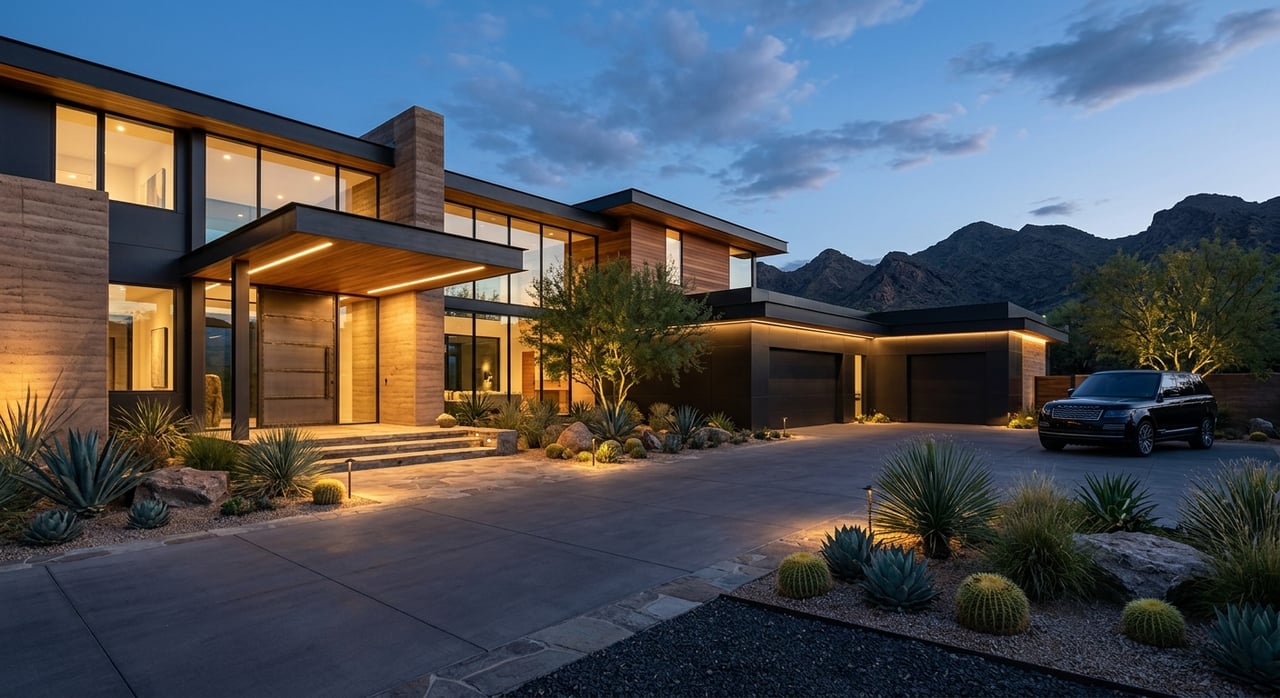
For many buyers relocating for the Scottsdale lifestyle, north Scottsdale is the dream image. The Desert Foothills and Dynamite Foothills areas are the city’s clearest shorthand for its rural-desert, custom-home side of the market.
Desert Foothills emphasizes open space, trails, and a mix of custom and semi-custom homes. Dynamite Foothills focuses on preserving rural desert character and generally supports 2- to 3-acre lots.
These areas also align with the higher end of Scottsdale’s pricing spectrum. ZIP code 85255 has an average home value of about $1,311,039, while 85262 is around $1,549,158, with a March 2026 median sale price of $1,597,500 and pending times around 47 days.
If preserve access, larger lots, and a lower-density desert environment matter most, north Scottsdale may be worth the longer distances. The McDowell Sonoran Preserve is a major draw here, with interconnected non-motorized trails and multiple trailheads.
The Airpark: Useful, But Different
The Greater Airpark is important to understand because many relocators hear about it early in their search. It is a major Scottsdale district, but it is not a conventional residential neighborhood in the same way as Old Town, south Scottsdale, or the foothills.
The Airpark is primarily a mixed-use employment and aviation district. Residential options do exist in transition areas, but the core is centered on office, retail, hotel, tourism-serving uses, and aviation-related activity.
If your work or lifestyle ties closely to north Scottsdale employment centers, the Airpark can still be relevant. Just go into your search knowing that it functions differently than a typical neighborhood-first area.
What Budget Buys in Scottsdale
A citywide snapshot gives helpful perspective. As of April 2026, Zillow places Scottsdale’s average home value at $858,307, with a March 2026 median sale price of $899,250.
That means Scottsdale is not generally an entry-level market, but it does offer a wide range of submarkets. Here is a simple budget ladder based on current ZIP code snapshots:
| ZIP Code | Average Value | Market Pace |
|---|---|---|
| 85257 | $558,555 | Around 26 days to pending |
| 85260 | $722,145 | Around 23 days to pending |
| 85258 | $860,655 | Around 27 days to pending |
| 85254 | $911,713 | Around 22 days to pending |
| 85259 | $1,146,676 | Around 32 days to pending |
| 85255 | $1,311,039 | Around 34 days to pending |
| 85262 | $1,549,158 | Around 47 days to pending |
This range is one reason relocation planning matters so much. A more efficient search starts with the right part of Scottsdale, not just a broad citywide price filter.
Parks, Golf, and Outdoor Access
Scottsdale’s lifestyle appeal goes far beyond housing. The city highlights more than 1,100 acres of open space, and 43 percent of Scottsdale’s land area is open space.
You will also find 41 parks, 975 acres of parkland, and destination amenities like the 30-acre McCormick-Stillman Railroad Park. If you enjoy biking, walking, or simply having outdoor space nearby, these assets can shape which part of Scottsdale feels best for you.
Golf is another major lifestyle filter. Scottsdale has 51 golf courses and 1,223 holes, and names like Troon North, Grayhawk, and TPC Scottsdale often serve as shorthand for certain parts of the market.
School Districts: Verify by Address
If school assignment matters in your move, treat it as address-specific. Scottsdale is served by multiple districts, including Scottsdale Unified, Paradise Valley Unified in north Scottsdale and north Phoenix, and Cave Creek Unified in far north Scottsdale and surrounding areas.
The key point is simple: verify the exact assignment by street address before you visit homes. In a city this large, district boundaries can shift from one area to another much more than many relocators expect.
How To Plan a Smarter Home Search Trip
Because Scottsdale spans so far north to south, your home tour should be organized by geography. Trying to see Old Town, south Scottsdale, and far north Scottsdale in one day usually means spending too much time in the car.
A more efficient approach is to cluster showings by north, central, and south Scottsdale. Before your trip, narrow your list using commute pattern, lot size, home style, HOA preference, school district by address, and access to the amenities you actually use.
Market speed matters too. In the current snapshot, some ZIP codes like 85260, 85258, 85254, and 85257 are moving in the low-20s to high-20s of days to pending, while 85262 is closer to seven weeks. If you are flying in for a limited search window, it helps to arrive pre-approved and ready to compare homes quickly.
Relocating to Scottsdale is much easier when you stop asking, “What is the best neighborhood?” and start asking, “Which part of Scottsdale fits how I want to live?” If you want help narrowing the search by commute, home style, budget, and neighborhood feel, Jaime Fernandez can help you build a focused plan before you ever step on a plane.
FAQs
Which Scottsdale areas are best for a shorter commute?
- Central and south Scottsdale are often the easier base if you expect lots of local trips, while north Scottsdale may work better if you want access to north-valley job centers and are comfortable using Loop 101.
Which Scottsdale area feels most walkable?
- Old Town Scottsdale is the city’s most walkable and bikeable urban core, with a strong mix of restaurants, galleries, museums, and retail.
Which Scottsdale neighborhoods have larger lots?
- Cactus Corridor, Desert Foothills, and Dynamite Foothills are the strongest fits if you want larger lots, custom or semi-custom homes, and a lower-density feel.
What is a practical budget range for relocating to Scottsdale?
- Current ZIP code snapshots range from about $558,555 average value in 85257 to about $1,549,158 in 85262, with the citywide average home value at $858,307.
Which Scottsdale area has more traditional ranch homes?
- Southern Scottsdale is the area most associated with older single-family detached ranch-style homes developed from the late 1950s through the early 1980s.
How should relocating buyers check school districts in Scottsdale?
- School fit should be verified by exact street address because Scottsdale is served by multiple districts, including Scottsdale Unified, Paradise Valley Unified, and Cave Creek Unified.
How should I plan a Scottsdale home-search trip?
- The most efficient plan is to group showings by geography, such as south, central, or north Scottsdale, instead of trying to cover the full city in one loop.