Shopping for a home in Scottsdale can feel simple at first, until you realize you are not really searching one market at all. You are searching a city that stretches about 31 miles from south to north, covers 184.5 square miles, and changes noticeably in housing style, setting, and buyer demand from one area to the next. If you understand those micro-markets early, you can search smarter, compare homes more accurately, and avoid using citywide averages that do not match your goals. Let’s dive in.
Why Scottsdale Feels Like Multiple Markets
Scottsdale is large, varied, and shaped by more than just price. The city’s topography rises by nearly 4,000 feet from south to north, and its planning framework breaks the city into more detailed character areas rather than treating every pocket the same.
That matters because two homes with similar square footage can compete in very different buyer pools depending on where they sit. In practice, your home search is often shaped by a smaller mix of housing age, land use, nearby amenities, and future development activity.
It also helps to be careful with ZIP codes. They are useful for search filters, but they are not exact neighborhood boundaries, so they should be treated as a shortcut rather than the full story.
What Buyers Notice First
Most buyers start to feel Scottsdale’s micro-market differences quickly. The biggest splits usually show up in housing age, lot style, access to lifestyle amenities, and how much nearby growth is planned.
For many buyers, the city starts to sort into a few broad search patterns:
- South Scottsdale and Old Town for older housing stock and urban access
- Central areas shaped by established neighborhoods and mixed-use planning
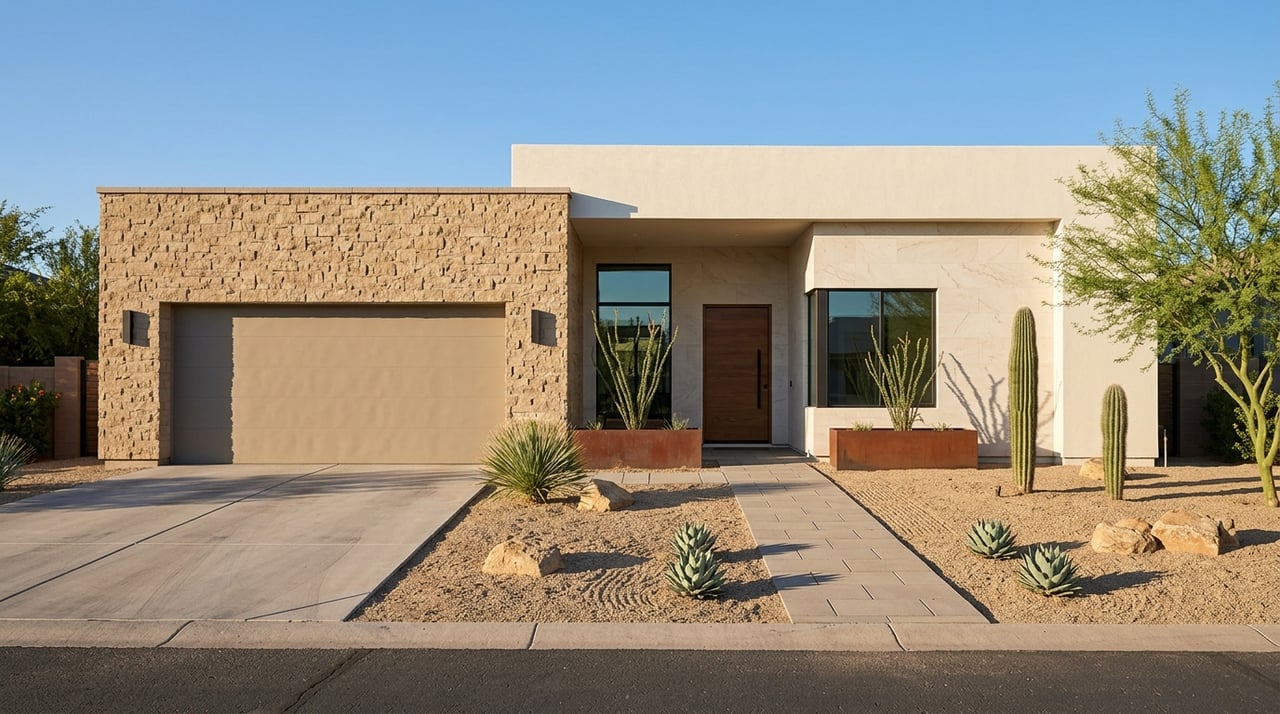
- North Scottsdale for desert-edge settings, preserve access, and lower-density areas
- Airpark-adjacent pockets for proximity to a major employment and growth area
These are not rigid lines, but they are useful ways to narrow your search when your priorities become clearer.
South Scottsdale and Old Town
South Scottsdale is the city’s southernmost character area, located south of Indian Bend Road. When that plan was adopted, the city said it held about 30% of Scottsdale’s population, and much of its housing stock and commercial development was already 30 or more years old.
Old Town stands apart even within the south. It has its own character-area plan and a distinct development pattern, which helps explain why buyers often evaluate it differently from nearby neighborhoods.
For you as a buyer, this often means the decision is not just about address. It is also about renovation level, lot condition, and whether the surrounding area feels stable, evolving, or actively redeveloping.
North Scottsdale and Desert Areas
North Scottsdale tends to appeal to buyers who want a different setting entirely. City planning documents for areas like the Cactus Corridor, Desert Foothills, and Dynamite Foothills emphasize low-density character, rural desert patterns in some sections, open space, and trail systems.
That planning context can shape what your money buys. In one pocket, you may find semi-custom redevelopment opportunities, while in another, the value is more tied to open space, views, or a quieter desert feel.
This is one reason broad Scottsdale comparisons can miss the mark. A home near preserve access or within a lower-density desert area may be responding to a very different set of value drivers than a home closer to older in-town neighborhoods.
Airpark and Growth Corridors
The Greater Airpark is one of Scottsdale’s most important market drivers. The city describes it as the largest industrial-zoned area in Scottsdale, a nationally recognized airport-based business park, and a designated growth area.
For buyers, that translates into more than commute convenience. It can affect demand, nearby services, future development, and the long-term feel of surrounding neighborhoods.
The city also keeps planning attention on other growth areas, including Old Town and the McDowell Corridor. If you are choosing between two homes, nearby entitlement and construction activity can matter almost as much as the house itself.
Why ZIP Codes Price Differently
Scottsdale’s 2025 Housing Needs Assessment excerpt gives a clear example of why citywide assumptions can be misleading. Within the city, ZIP code 85266 had by far the highest median home value, while 85264 had a younger population and 85266 and 85250 had larger shares of older residents.
That is a helpful reminder that price differences are not random. They often reflect a mix of housing stock, age profile, amenity access, and overall planning context.
So if you are comparing homes across several ZIP codes, it is worth asking whether they are truly competing with each other. In many cases, they are not.
Citywide Numbers Still Matter
Even though micro-markets drive the most useful comparisons, the big-picture market still provides helpful context. In March 2026, Scottsdale had 3,158 active listings, 6.11 months of inventory, 685 closed sales, a median sold price of $994,800, and a median of 44 days in RPR. New listings had a median list price of $999,000.
Those numbers tell you Scottsdale is still a high-value market overall. They also show why precision matters, because once the citywide median is already near the $1 million mark, small location differences can create very large swings in value.
The housing stock also remains largely detached-home oriented. Scottsdale reported 136,665 total housing units, with 73.8% of residents living in single-unit housing, and the owner-occupied housing rate was 67.0%.
Amenities Can Shift Value Fast
One of the clearest reasons Scottsdale pockets behave differently is the amenity mix. The Indian Bend Wash Greenbelt runs 11 miles through the heart of the city and includes more than 24 grade-separated crossings, while the canal trail system connects residential areas to Old Town shopping, dining, and entertainment.
The Scottsdale Trolley adds another layer of access by connecting entertainment, shopping, dining, parks, libraries, community centers, and more. For some buyers, that type of connectivity becomes part of the home’s value, not just a nice extra.
In northern Scottsdale, the McDowell Sonoran Preserve plays a similar role in a very different setting. It is a permanently protected open-space system with more than 60 miles of trails and covers roughly one-third of Scottsdale’s land area, with access points in ZIP codes such as 85255, 85259, 85260, and 85262.
If your lifestyle includes walking, trail access, or simply wanting nearby open space, that can narrow your search far more effectively than using price alone.
New Development Affects Your Search
Many buyers assume Scottsdale still has endless room to build, but the city says vacant land is declining. More than 60% of Scottsdale, about 111 square miles, is zoned residential, and the city reported 838 units under construction, 1,394 completed, 1,706 in review, and 1,222 units approved through zoning entitlement cases in FY2023-2024.
That pipeline matters because future housing activity can influence traffic patterns, nearby services, and future comparable sales. Scottsdale is also concentrating higher-intensity uses in designated growth and activity areas while implementing state-mandated housing options such as ADUs and middle housing.
You do not need to overreact to every project, but you should understand what is happening around a home before you make an offer. In some areas, nearby development may support convenience and value. In others, it may change the feel you thought you were buying into.
How to Search Smarter in Scottsdale
If you want better results, start by defining your search around micro-market fit, not just a city name. A more useful home search usually compares like-for-like homes within a similar planning and lifestyle context.
Here are a few smart filters to use early:
- Age of housing stock
- Character area or broader submarket
- Access to the Greenbelt, Old Town, Airpark, or Preserve
- Nearby construction or entitlement activity
- Lot size, density, and surrounding land use
This approach gives you a cleaner comparison set. It also helps you avoid falling in love with a price point that only exists in a part of Scottsdale that does not match how you actually want to live.
The Bottom Line for Your Home Search
Scottsdale rewards buyers who think in neighborhoods, corridors, and planning context instead of treating the whole city as one price band. From older housing in South Scottsdale to desert-edge pockets in the north, each micro-market creates its own mix of lifestyle, resale patterns, and competition.
If you are buying in today’s market, the best question is not just, "Is this a good Scottsdale home?" It is, "Is this the right home in the right Scottsdale micro-market for my goals?"
When you want a more tailored view of how specific Scottsdale pockets compare, Jaime Fernandez can help you narrow your search with local insight, clear strategy, and a concierge-level approach.
FAQs
Why does Scottsdale real estate vary so much by area?
- Scottsdale covers a large geographic area and includes different character areas, housing ages, amenities, and growth patterns, so buyer demand and pricing can vary significantly from one pocket to another.
Should Scottsdale buyers rely on citywide median prices?
- Citywide numbers are useful for context, but the most accurate home comparisons usually come from a smaller slice of Scottsdale with similar housing stock, location factors, and amenity access.
What makes North Scottsdale different from South Scottsdale?
- North Scottsdale often includes lower-density desert settings, preserve access, and different land-use patterns, while South Scottsdale generally has older housing stock and stronger ties to Old Town and central amenities.
Does new construction matter when buying in Scottsdale?
- Yes. Scottsdale reported hundreds of units under construction and more in review, so nearby development can affect future comps, traffic, and the feel of an area.
Are Scottsdale ZIP codes the same as neighborhoods?
- No. ZIP codes are helpful search tools, but they are not exact neighborhood boundaries, so they should be used as a starting point rather than a complete definition of a market area.