Is a private pool a smart move in Scottsdale, or a costly luxury? If you are weighing a home with a pool, you are not alone. In our desert climate, a pool can be a daily comfort and a lifestyle centerpiece, yet it also brings real costs and responsibilities. In this guide, you will learn how pools affect home prices, what to budget for ownership, and how to think about ROI in Scottsdale. Let’s dive in.
Why pools matter in Scottsdale
Scottsdale’s long, hot seasons make a pool more than a showpiece. You can use it much of the year, and many buyers see it as a must-have or strong nice-to-have. That can boost appeal compared to similar homes without pools.
At the same time, not every buyer wants a pool. Some will avoid the extra maintenance or safety concerns. Your goal is to understand how a pool fits your needs and how it performs in your target neighborhood. In luxury enclaves and areas where pools are common, the market impact is usually stronger.
What a pool may add to price
In warm-weather markets like Scottsdale, homes with pools often command a premium. The size of that premium depends on neighborhood norms, lot layout, and condition. If most nearby homes have pools, buyers may treat it as an expected feature rather than a bonus. If the pool is aging or poorly maintained, the perceived value can drop.
A key point is that resale premiums rarely match full construction cost. Appraisers and buyers focus on a pool’s contributory value, not the entire amount it took to build it. Expect a positive lift in many cases, but plan on partial cost recovery rather than full payback from resale alone.
Upfront and ongoing costs
A smart decision starts with realistic budgeting. Separate one-time costs from recurring costs, then layer in long-term repairs.
Installation and upgrades
If you add or replace a pool after purchase, cost varies by size, design, and features. For a typical in-ground gunite or concrete pool, national ballpark ranges often fall between the mid tens of thousands, commonly around 35,000 to 100,000 plus for more complex builds. High-end features like spas, water features, premium decking, lighting, automation, or salt systems can add several thousand to tens of thousands more.
Local labor, materials, and permitting can push Scottsdale costs above national averages. Shade structures and desert-friendly landscaping also add to the budget. Always get multiple bids from licensed local contractors and confirm permitting steps and fees before you commit.
Operating and maintenance costs
Plan for ongoing expenses once you own the home:
- Routine care: Chemicals, cleaning tools, or weekly service typically total in the low to mid thousands per year. A common national range is about 1,200 to 4,000 annually, depending on whether you DIY or hire a service and on system complexity.
- Utilities: Pumps, heaters, lighting, and automation drive electricity use. Variable-speed pumps usually reduce energy compared to single-speed pumps. In our arid climate, evaporation increases water use, which raises refill needs and water bills.
- Repairs and replacements: Over time you may replace pumps, filters, heaters, lighting, and resurfacing. These are multiyear items that add up to thousands over the life of the pool.
Insurance and safety compliance
Pools can raise homeowners insurance premiums, and carriers may require safety features such as compliant fencing or alarms. If you plan to rent short term or long term, expect stricter requirements. Scottsdale and Maricopa County enforce barrier and fence rules for residential pools, so include compliance in your budget.
ROI: resale, rental, and lifestyle
Think about ROI across three lenses: resale value, rental income, and your quality of life.
Resale payback
Pools often help a Scottsdale home sell faster and for more than a similar non-pool home, especially where pools are common and well maintained. That said, it is conservative to expect only partial payback of a new installation at resale. Pool age, surface condition, equipment quality, and overall presentation all matter.
Short-term rental considerations
For vacation rentals, a private pool can increase nightly rates and occupancy in Scottsdale’s resort-driven market. The lift depends on pool quality, outdoor living spaces, seasonality, and local competition. Weigh the extra revenue potential against higher utilities, cleaning, maintenance, insurance, and any HOA or local regulatory limits for rentals.
Lifestyle return
Many Scottsdale owners value a pool for daily comfort, entertaining, and fitness. This lifestyle return can outweigh pure financial payback for many buyers. If you plan to live in the home and use the pool often, that non-financial ROI can be a decisive factor.
Scottsdale rules and resource factors
Understanding local rules and resource realities will help you set the right plan and budget.
Permits and barriers
The City of Scottsdale requires permits for pool construction and enforces building codes for residential pools. Barriers, self-closing gates, and, in some cases, alarms are part of compliance. If you buy in a community with an HOA, you must also follow architectural rules that can affect design and timelines. Contact the City of Scottsdale for permit guidance and check HOA rules early.
Water and conservation
Arizona continues to manage long-term water constraints. Pools in our desert climate face higher evaporation and refill needs. Factor water rates and potential restrictions into your operating budget. City water conservation resources can help you plan responsible use.
Energy efficiency upgrades
Energy-saving features reduce operating costs and can improve buyer appeal:
- Variable-speed pumps to lower electricity use
- Pool covers to reduce evaporation and heat loss
- Solar pool heating or efficient gas or electric heaters
- LED lighting and automation to optimize runtime
Local utilities at times offer rebates for efficient equipment, so it is worth checking current programs. These upgrades can also reassure future buyers that the pool is affordable to run.
Real-world scenarios in Scottsdale
Here are three common paths clients consider. Use them to frame your own plan.
- Entry-level upgrade scenario: You buy a home with an older, modest pool. You budget for resurfacing and a new variable-speed pump within a few years. Your financial ROI is mixed because of near-term repairs, but daily use and comfort create strong lifestyle value.
- Mid-market, well-kept pool: You buy in a neighborhood where pools are common. The pool is in good condition with updated equipment. You enjoy moderate operating costs, a smoother ownership experience, and a realistic chance of partial payback when you sell.
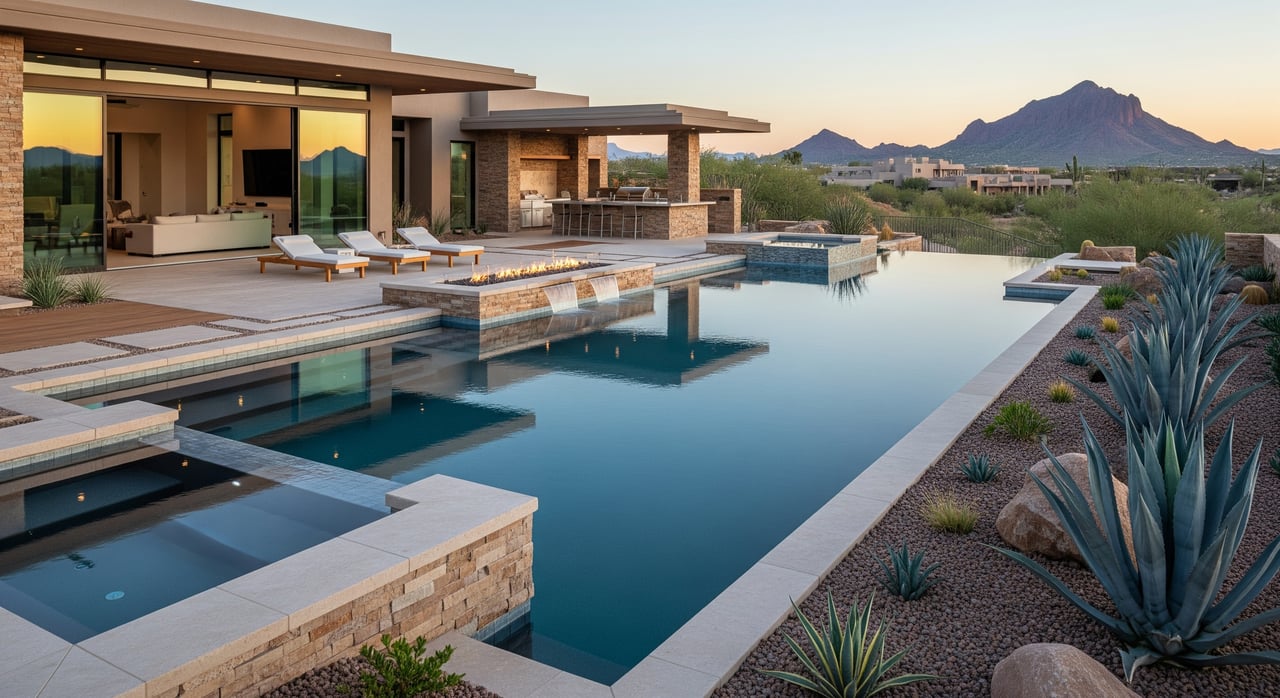
- Luxury outdoor living: You purchase a high-end Scottsdale home where the pool, landscaping, and outdoor kitchen create a resort-like experience. In these settings, a quality pool often aligns with higher buyer expectations and can support stronger resale pricing.
Buyer checklist for Scottsdale pool homes
Use this quick list during showings and inspections:
- Condition and finish: Surface, tile, decking, coping, and visible cracks
- Equipment age and type: Pump, filter, heater, automation, and lighting
- Energy features: Variable-speed pump, solar heating, LED lights, pool cover
- Water and leaks: Signs of leaks, waterline staining, or constant refill
- Safety and compliance: Fencing, self-closing gates, alarms where applicable
- Permits and records: Evidence of permits for construction or remodel work
- Service history: Maintenance logs, chemical system type, recent repairs
- Landscaping and shade: Plant debris load, leaf drop sources, hardscape fit
- Usability: Sun exposure, privacy, and how the pool affects yard function
- Insurance: Expected premium change and any carrier requirements
Seller checklist to prep your pool for sale
Before listing, make your pool a market asset:
- Service and clean: Schedule professional cleaning and chemical balance
- Repair and refresh: Address cracked tile, worn decking, and poor lighting
- Equipment tune-up: Confirm proper operation, consider a variable-speed pump
- Document everything: Permits, receipts, resurfacing dates, and upgrades
- Safety first: Verify barrier compliance and self-closing gates
- Outdoor living: Stage with clean furniture, shade, and simple planting
Next steps
If a pool fits your Scottsdale lifestyle, the right home and a solid plan can make it a smart choice. Price the feature correctly, budget for realistic operating costs, and stay ahead of compliance and maintenance. If you are an investor, model the revenue lift and operating costs carefully. If you are a seller, present a clean, documented, efficient pool to maximize appeal.
Thinking about a pool home or preparing to sell one in North Scottsdale or the 85254 corridor? Reach out for neighborhood-level guidance, a tailored plan, and introductions to trusted inspectors and contractors. Connect with Jaime Fernandez to get started.
FAQs
What ongoing costs should I expect for a Scottsdale pool?
- Plan for routine service and chemicals in the low to mid thousands per year, plus electricity, water for evaporation, and periodic equipment replacements over time.
Do pools raise home values enough to cover installation?
- Often not fully; in warm markets like Scottsdale, pools can boost appeal and price, but resale premiums commonly reflect only part of the build cost.
Will my homeowners insurance increase if I have a pool?
- Many carriers charge higher premiums or require safety features for homes with pools, and rental properties typically face stricter requirements.
What local rules apply to residential pools in Scottsdale?
- The City of Scottsdale requires permits and enforces barrier and fence standards, and HOAs may have additional architectural rules and approvals.
Which upgrades improve ROI for Scottsdale pool homes?
- Variable-speed pumps, pool covers, efficient heating, LED lighting, automation, and documented safety compliance lower costs and enhance buyer appeal.